Welcome to the ultimate deep dive into AWS 53—a comprehensive exploration of Amazon Web Services that demystifies cloud computing for beginners and pros alike. Whether you’re building scalable apps or managing enterprise infrastructure, this guide has you covered.
Understanding AWS 53: What Is It Really?

The term “AWS 53” might sound like a mysterious code or a new product launch from Amazon, but in reality, it’s often a misinterpretation or typographical variation related to Amazon Web Services (AWS) and its various components—especially Route 53. While there is no official service called “AWS 53,” the number 53 frequently refers to Amazon Route 53, a highly reliable and scalable Domain Name System (DNS) web service. The ’53’ in Route 53 comes from port 53, which is traditionally used for DNS services across the internet.



Why the Confusion Around AWS 53?
Many users searching for information about AWS services may accidentally type “AWS 53” instead of “Route 53.” This typo has become common enough that search engines and content platforms now associate “AWS 53” with Amazon’s DNS service. As a result, even though AWS 53 isn’t an official product name, it serves as a colloquial reference to Route 53.
- “AWS 53” is not a standalone AWS product.
- It commonly refers to Amazon Route 53 due to the DNS port number 53.
- Search behavior has cemented this informal naming convention.
The Role of Port 53 in Networking
DNS operates primarily over port 53 using both TCP and UDP protocols. This port is reserved specifically for DNS queries and responses. When a user types a domain name into their browser, the request goes to a DNS server listening on port 53 to resolve the human-readable name into an IP address. Amazon Route 53 leverages this standard to provide fast, secure, and accurate domain resolution.
“Port 53 is the backbone of the internet’s naming system—without it, websites wouldn’t know how to find each other.” — Networking Expert, IEEE Communications Society
AWS 53 and Amazon Route 53: Are They the Same?
While “AWS 53” isn’t an official term, it’s widely used as a shorthand for Amazon Route 53. In this section, we clarify the relationship between the two and explain why understanding Route 53 is crucial for anyone using AWS.
What Is Amazon Route 53?
Amazon Route 53 is a cloud-based DNS service provided by Amazon Web Services. It enables developers and businesses to route end users to internet applications by translating domain names (like www.example.com) into IP addresses that computers use to connect. The service is designed to be highly available and scalable, making it ideal for global applications.
- Acts as a DNS resolver and registrar.
- Provides health checks and traffic flow management.
- Integrates seamlessly with other AWS services like EC2, S3, and CloudFront.
Key Features of Route 53
Route 53 offers several powerful features that make it a top choice for DNS management:
- Domain Registration: You can register new domains directly through Route 53.
- DNS Management: Create and manage DNS records such as A, AAAA, CNAME, MX, and TXT records.
- Traffic Flow: Route traffic based on latency, geography, or failover configurations.
- Health Checks: Monitor endpoints and automatically route traffic away from unhealthy ones.
- Alias Records: Route traffic to AWS resources without additional DNS query costs.
For more details, visit the official Amazon Route 53 product page.
Core Benefits of Using AWS 53 (Route 53)
When people refer to “AWS 53,” they’re usually interested in the advantages offered by Amazon Route 53. Let’s explore the core benefits that make this service indispensable for modern cloud architectures.
High Availability and Reliability
Amazon Route 53 is built to provide 100% availability. It uses a globally distributed network of DNS servers to ensure that domain queries are resolved quickly and reliably, no matter where the user is located. This global presence reduces latency and improves application performance.
- DNS servers are deployed across multiple AWS regions.
- Automatic failover ensures continuity during outages.
- Designed to handle massive query volumes without degradation.
Scalability for Growing Applications
As your application grows, so do your DNS needs. Route 53 automatically scales to accommodate increasing traffic without requiring manual intervention. Whether you’re serving thousands or millions of requests per second, Route 53 handles the load seamlessly.
“Route 53 scales invisibly in the background, allowing developers to focus on building features, not infrastructure.” — AWS Solutions Architect
How AWS 53 Integrates with Other AWS Services
One of the biggest strengths of Amazon Route 53 (often referred to as AWS 53) is its deep integration with other AWS services. This synergy enhances functionality, simplifies management, and improves overall system reliability.
Integration with Amazon EC2
When you launch an EC2 instance, you can assign it a public IP address or an Elastic IP. Route 53 allows you to map a domain name to that IP address using A records. If the instance is replaced or fails, you can update the DNS record or use health checks to redirect traffic automatically.
- Supports dynamic DNS updates via AWS CLI or SDKs.
- Can route traffic based on instance health.
- Works with Auto Scaling groups for elastic workloads.
Working with Amazon S3 and CloudFront
For static websites hosted on Amazon S3, Route 53 can direct traffic to the S3 bucket endpoint. When combined with CloudFront (AWS’s Content Delivery Network), Route 53 can route users to the nearest edge location for faster content delivery. You can also configure weighted or latency-based routing to optimize user experience.
- Supports alias records pointing to S3 website endpoints.
- Enables seamless CDN integration with CloudFront distributions.
- Allows custom domain names for S3-hosted sites.
Setting Up Your First Domain with AWS 53 (Route 53)
Getting started with Amazon Route 53—commonly searched as AWS 53—is straightforward. This step-by-step guide walks you through registering a domain and configuring DNS settings.
Step 1: Register a Domain Name
Log in to the AWS Management Console and navigate to the Route 53 dashboard. Use the domain search tool to check availability. Once you find a suitable name, proceed with registration. AWS supports popular TLDs like .com, .net, .org, and country-specific domains.
- Choose a unique and brandable domain name.
- Enable WHOIS privacy protection (optional).
- Complete the purchase using your AWS billing method.
Step 2: Create a Hosted Zone
A hosted zone is a container for DNS records for a domain. After registering your domain, create a public hosted zone. AWS will automatically generate NS (Name Server) records and a SOA (Start of Authority) record.
- Go to Hosted Zones in the Route 53 console.
- Click “Create Hosted Zone” and enter your domain name.
- AWS provides four name servers—update your domain’s NS records if needed.
Step 3: Add DNS Records
Now, add the necessary DNS records to route traffic. Common records include:
- A Record: Maps a domain to an IPv4 address (e.g., your EC2 instance).
- AAAA Record: For IPv6 addresses.
- CNAME Record: Maps a subdomain (like www) to another domain name.
- MX Record: Directs email to your mail server.
- TXT Record: Used for verification (e.g., SPF, DKIM).
For detailed instructions, refer to the Route 53 Developer Guide.
Advanced Traffic Management with AWS 53
Amazon Route 53 (often called AWS 53) goes beyond basic DNS resolution. It offers advanced traffic routing policies that allow you to control how users access your applications based on various criteria.
Routing Policies in Route 53
Route 53 supports several routing policies:
Simple Routing: Routes traffic to a single resource.Weighted Routing: Distributes traffic among multiple resources based on assigned weights (e.g., 70% to Server A, 30% to Server B).Latency-Based Routing: Routes users to the AWS region with the lowest network latency.Failover Routing: Used for active-passive setups; switches to a backup resource if the primary fails.Geolocation Routing: Routes traffic based on the user’s geographic location.
.Multi-Value Answer Routing: Returns multiple healthy IP addresses in response to DNS queries.Use Case: Global Application Load Balancing
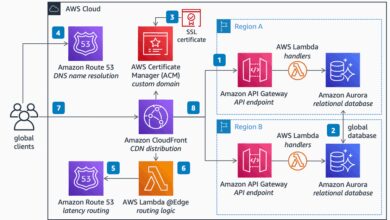
Imagine you have web servers running in US-East-1, EU-West-1, and AP-South-1.Using latency-based routing in AWS 53, users in Europe are automatically directed to the Frankfurt server, while users in India are routed to Mumbai.This minimizes latency and improves user experience..
“With Route 53’s latency routing, our app load times dropped by 40% globally.” — CTO, TechScale Inc.
Security and Compliance in AWS 53
Security is a top priority when managing DNS infrastructure. Amazon Route 53 (commonly referred to as AWS 53) includes robust security features to protect your domains and routing configurations.
DNSSEC Support
Domain Name System Security Extensions (DNSSEC) help prevent DNS spoofing and cache poisoning attacks. Route 53 supports DNSSEC signing for both hosted zones and domains registered with AWS. By enabling DNSSEC, you ensure that responses from your DNS server are authenticated and tamper-proof.
- Enable DNSSEC in the Route 53 console.
- Requires a trust anchor with your domain registrar.
- Protects against man-in-the-middle attacks.
Private Hosted Zones
For internal applications, Route 53 offers private hosted zones that are only accessible within your Amazon VPC (Virtual Private Cloud). This allows you to manage internal DNS without exposing it to the public internet.
- Useful for microservices communication.
- Supports split-horizon DNS (different records for internal vs external users).
- Integrates with AWS Directory Service and hybrid cloud setups.
Monitoring and Troubleshooting AWS 53 Services
Even the most reliable systems require monitoring. Amazon Route 53 provides tools to monitor DNS health, troubleshoot issues, and ensure optimal performance.
Health Checks and Alarms
Route 53 can perform automated health checks on your web servers, IP addresses, or other endpoints. If a server fails to respond, Route 53 can automatically reroute traffic to a backup server using failover routing.
- Configure HTTP, HTTPS, or TCP health checks.
- Set thresholds for response time and status codes.
- Integrate with Amazon CloudWatch to trigger alarms.
Query Logging with CloudWatch
You can enable DNS query logging to capture detailed information about DNS queries made to your hosted zones. Logs are sent to Amazon CloudWatch Logs, where you can analyze traffic patterns, detect anomalies, or investigate security incidents.
- Helps identify DDoS attack patterns.
- Useful for auditing and compliance reporting.
- Can be integrated with third-party SIEM tools.
Learn more about monitoring at the Route 53 Monitoring Guide.
Cost Management and Pricing for AWS 53
Understanding the pricing model of Amazon Route 53 (often searched as AWS 53) is essential for budgeting and cost optimization.
Route 53 Pricing Components
Route 53 charges are based on several factors:
- Hosted Zones: $0.50 per month per hosted zone.
- DNS Queries: $0.40 – $0.50 per million queries (varies by region and query type).
- Domain Registration: Varies by TLD (e.g., .com is ~$12/year).
- Traffic Flow: $0.50 per policy per month + $0.001 per million DNS queries.
- Health Checks: $0.75 per health check per month (if not linked to a routing policy).
Cost Optimization Tips
To keep costs under control:
- Delete unused hosted zones.
- Use TTL (Time to Live) settings wisely to reduce query volume.
- Leverage caching at the application or CDN level.
- Monitor query logs to identify and block suspicious traffic.
Use the AWS Pricing Calculator to estimate your monthly Route 53 costs.
Common Misconceptions About AWS 53
Due to the informal use of “AWS 53,” several misconceptions exist. Let’s clarify them.
Misconception 1: AWS 53 Is a Separate Product
No, AWS 53 is not a standalone service. It’s a colloquial term for Amazon Route 53. There is no separate console, API, or billing line item for “AWS 53.” All functionality falls under Route 53.
Misconception 2: Only for AWS Resources
While Route 53 integrates seamlessly with AWS, it can route traffic to any internet resource—on-premises servers, third-party cloud providers (like Azure or Google Cloud), or SaaS platforms.
“Route 53 doesn’t lock you into AWS—it gives you freedom with flexibility.” — Cloud Consultant, Gartner
Best Practices for Using AWS 53 (Route 53)
To get the most out of Amazon Route 53, follow these best practices:
- Use health checks with failover routing for high availability.
- Enable DNSSEC for critical domains.
- Use private hosted zones for internal services.
- Regularly audit DNS records for accuracy and security.
- Document routing policies and update them as infrastructure evolves.
Automate DNS Management
Leverage AWS SDKs, CLI, or Infrastructure as Code (IaC) tools like AWS CloudFormation or Terraform to automate DNS record creation and updates. This reduces human error and ensures consistency across environments.
Plan for Disaster Recovery
Configure secondary DNS providers or use Route 53’s failover routing to maintain availability during outages. Test your DR plan regularly to ensure it works when needed.
What is AWS 53?
AWS 53 is not an official AWS service. It’s a common misnomer for Amazon Route 53, a scalable DNS web service provided by Amazon Web Services. The “53” refers to port 53, used for DNS traffic.
Is Amazon Route 53 free to use?
No, Route 53 is not entirely free. It has a pay-as-you-go pricing model based on hosted zones, DNS queries, domain registration, and health checks. However, AWS offers a free tier with limited queries and one free domain registration (renewal not included).
Can I use Route 53 with non-AWS servers?
Yes, absolutely. Amazon Route 53 can route traffic to any internet-accessible endpoint, including servers hosted on-premises, in other cloud providers, or in hybrid environments.
How do I enable DNSSEC in Route 53?
You can enable DNSSEC in the Route 53 console by navigating to your hosted zone, selecting “DNSSEC signing,” and following the prompts. You’ll also need to provide a trust anchor to your registrar if they support DNSSEC.
What is the difference between public and private hosted zones?
Public hosted zones are accessible on the internet and used to route traffic to publicly available resources. Private hosted zones are only accessible within one or more Amazon VPCs and are used for internal DNS resolution in cloud environments.
In conclusion, while “AWS 53” isn’t an official product, it’s a widely recognized term pointing to Amazon Route 53—the backbone of DNS management in the AWS ecosystem. From domain registration to advanced traffic routing and security, Route 53 empowers businesses to build resilient, high-performance applications. By understanding its features, pricing, and best practices, you can leverage this powerful service to its fullest potential. Whether you’re a startup or an enterprise, mastering Route 53 is a critical step in your cloud journey.
Further Reading: