Looking to build full-stack web and mobile apps faster? AWS Amplify is the ultimate toolkit that simplifies development with seamless backend integration, real-time features, and effortless deployment—all without sacrificing scalability or security.
What Is AWS Amplify and Why It Matters
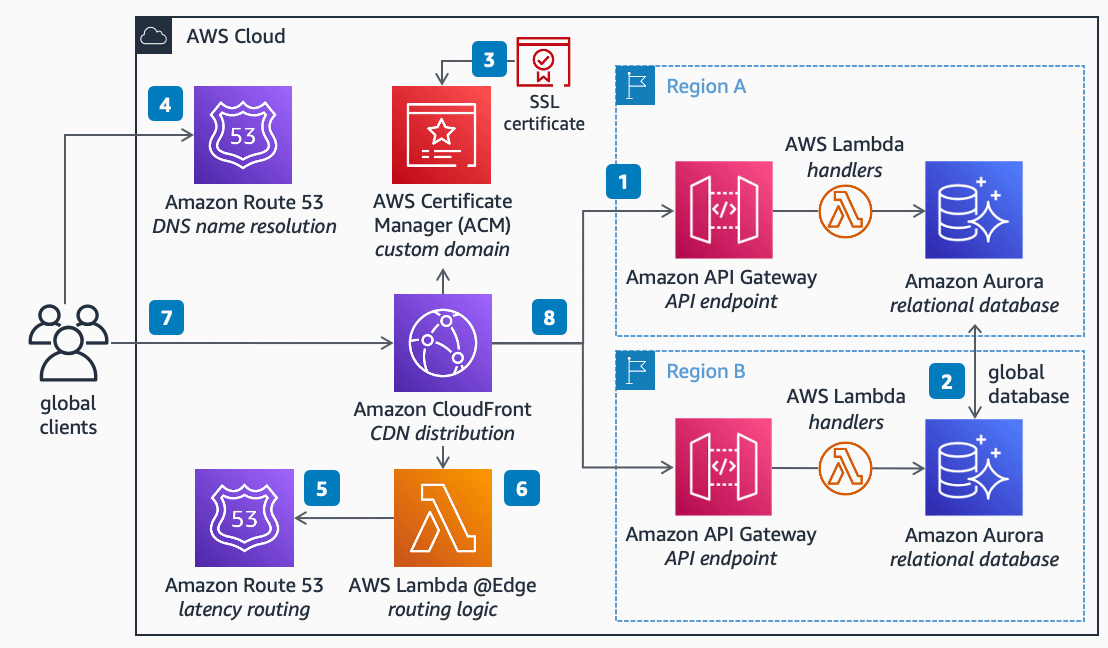
AWS Amplify is a comprehensive development platform from Amazon Web Services (AWS) designed to help frontend developers build full-stack applications quickly and efficiently. It eliminates the complexity traditionally associated with backend setup, authentication, data storage, and deployment. Instead of managing infrastructure manually, developers can use Amplify’s libraries, UI components, and command-line interface (CLI) to connect their apps to powerful AWS services in minutes.






Core Components of AWS Amplify
AWS Amplify isn’t a single service—it’s a suite of tools and services working together to streamline app development. The platform consists of three main components: Amplify CLI, Amplify Libraries, and Amplify Console. Each plays a crucial role in simplifying the development lifecycle.
- Amplify CLI: A powerful command-line tool that enables developers to provision and manage AWS cloud services directly from their terminal.
- Amplify Libraries: Client-side libraries for JavaScript, Flutter, iOS, and Android that integrate seamlessly with AWS services like Cognito, AppSync, and S3.
- Amplify Console: A continuous deployment and hosting service that automates the build and deployment process from a Git repository.
Together, these components allow developers to focus on writing application logic rather than configuring servers or managing infrastructure. This makes AWS Amplify particularly appealing for startups, indie developers, and teams aiming for rapid prototyping and agile delivery.
“AWS Amplify allows frontend developers to become full-stack developers overnight.” — AWS Developer Evangelist
How AWS Amplify Fits into the Modern Development Stack
In today’s fast-paced development environment, time-to-market is critical. Traditional app development often involves setting up servers, databases, authentication systems, and CI/CD pipelines—each requiring specialized knowledge and significant time investment. AWS Amplify changes this by abstracting away much of the backend complexity.
For example, a developer building a React app can use the Amplify CLI to add user authentication with Amazon Cognito, store data using Amazon DynamoDB via AWS AppSync, and host the app globally with the Amplify Console—all with a few simple commands. This integration reduces boilerplate code and accelerates development cycles.
Moreover, AWS Amplify supports popular frontend frameworks like React, Angular, Vue, Next.js, and mobile platforms such as React Native, Flutter, iOS, and Android. This broad compatibility ensures that developers aren’t locked into a specific tech stack while still benefiting from AWS’s robust cloud infrastructure.
Key Features That Make AWS Amplify Stand Out
AWS Amplify offers a rich set of features that empower developers to build scalable, secure, and high-performing applications. From authentication to serverless APIs, each feature is designed to reduce friction in the development process. Let’s explore the most impactful ones.
User Authentication with Amazon Cognito
One of the most time-consuming aspects of app development is implementing secure user authentication. AWS Amplify simplifies this by integrating directly with Amazon Cognito, a fully managed identity service.
With a single command—amplify add auth—developers can enable sign-up, sign-in, multi-factor authentication (MFA), social logins (Google, Facebook, Apple), and even custom authentication flows. Amplify automatically generates the necessary backend resources and provides pre-built UI components for common login screens.
This means developers don’t need to write custom authentication logic or manage password databases. Cognito handles user management, session tokens, and security best practices, while Amplify ensures seamless frontend integration.
Learn more about Amazon Cognito: https://aws.amazon.com/cognito/
GraphQL APIs with AWS AppSync
Data is at the heart of every application, and AWS Amplify makes it easy to build and consume APIs. By default, Amplify uses AWS AppSync, a managed GraphQL service, to enable real-time data synchronization and offline access.
Using the command amplify add api, developers can create a GraphQL API backed by Amazon DynamoDB. Amplify automatically generates schema definitions, resolvers, and data models. It also provisions a secure endpoint accessible from the frontend.
GraphQL offers significant advantages over REST, including:
- Efficient data fetching (no over-fetching or under-fetching)
- Strong typing with schema definition
- Real-time updates via subscriptions
- Single endpoint for all operations
Amplify enhances this experience by generating TypeScript or JavaScript types based on the schema, enabling type-safe queries and mutations in the frontend. It also supports offline data access—data is cached locally and synchronized when the device reconnects.
Explore AWS AppSync: https://aws.amazon.com/appsync/
File Storage with Amazon S3
Modern applications often require file upload capabilities—whether it’s user avatars, documents, or media files. AWS Amplify integrates seamlessly with Amazon S3, one of the most reliable and scalable object storage services in the cloud.
By running amplify add storage, developers can configure secure file storage with fine-grained access controls. Amplify allows defining who can read or write files—public, protected (user-specific), or private (admin-only).
The Amplify Libraries provide simple methods like Storage.put() and Storage.get() to upload and retrieve files from S3. These operations are automatically secured using temporary AWS credentials from Amazon Cognito Identity Pools.
This integration eliminates the need for backend endpoints to handle file uploads, reducing latency and infrastructure complexity. It also ensures that files are stored securely and served globally via Amazon CloudFront.
Learn more about Amazon S3: https://aws.amazon.com/s3/
Amplify CLI: The Developer’s Best Friend
The Amplify Command Line Interface (CLI) is the backbone of the entire AWS Amplify experience. It’s a powerful tool that enables developers to provision, configure, and manage AWS cloud services directly from their development environment.
Getting Started with Amplify CLI
To begin using the Amplify CLI, developers must first install it via npm:
npm install -g @aws-amplify/cli
After installation, they run amplify configure to set up AWS credentials using an IAM user with appropriate permissions. Once configured, the CLI can be used to initialize a new project with amplify init, which creates a local configuration file and links the project to an AWS environment.
From there, adding features becomes as simple as running commands like:
amplify add auth– Add user authenticationamplify add api– Add a GraphQL or REST APIamplify add storage– Add file storageamplify add hosting– Deploy the app
Each command guides the user through a series of prompts to customize the service configuration. Behind the scenes, the CLI generates CloudFormation templates to provision the necessary AWS resources in a secure and repeatable way.
Environment Management and Team Collaboration
AWS Amplify CLI supports multi-environment workflows, making it ideal for team-based development. Developers can create isolated environments such as dev, test, and prod using the command amplify env add.
Each environment has its own set of AWS resources, preventing conflicts during development. For example, changes made in the dev environment won’t affect the production database. This isolation ensures safer testing and deployment practices.
When working in teams, the Amplify CLI uses Git-based workflows. One team member can push their environment configuration using amplify push, and others can pull it with amplify pull. This synchronization ensures that everyone on the team has access to the same cloud resources and configurations.
This approach promotes consistency, reduces configuration drift, and enhances collaboration—especially in distributed teams.
“The Amplify CLI turns infrastructure management into a developer-friendly experience.” — Senior Cloud Architect
Amplify Console: Effortless CI/CD and Hosting
Deploying web applications used to require complex CI/CD pipelines, server configurations, and DNS management. AWS Amplify Console simplifies this by offering a fully managed hosting and continuous deployment service tailored for modern web apps.
Automated Build and Deployment Workflows
The Amplify Console integrates directly with popular Git providers like GitHub, Bitbucket, GitLab, and AWS CodeCommit. When a developer connects their repository, Amplify automatically detects the framework (React, Angular, Vue, etc.) and suggests a default build configuration.
Every time a new commit is pushed to a connected branch (e.g., main or develop), Amplify triggers a new build. It runs the specified build commands (like npm run build), generates static assets, and deploys them to a globally distributed content delivery network (CDN) powered by Amazon CloudFront.
This automation eliminates the need for manual deployments or third-party CI/CD tools. It also supports preview branches—each pull request gets its own temporary URL where stakeholders can review changes before merging.
Additionally, the Amplify Console provides real-time build logs, performance metrics, and rollback capabilities, giving developers full visibility and control over their deployments.
Custom Domains and SSL Certificates
For production applications, using a custom domain is essential. The Amplify Console makes it easy to connect a custom domain (e.g., app.yourcompany.com) and automatically provisions an SSL/TLS certificate via AWS Certificate Manager (ACM).
This ensures that all traffic is encrypted using HTTPS, improving security and SEO rankings. The domain configuration is handled entirely within the Amplify Console, with no need to manually configure Route 53 or manage certificates.
Developers can also set up redirect rules, manage subdomains, and enable branch-level domain mappings—for example, pointing staging.yourapp.com to the staging branch.
Explore Amplify Console: https://aws.amazon.com/amplify/console/
Real-Time and Offline Capabilities with AWS Amplify
Modern users expect applications to work seamlessly, even with poor or no internet connectivity. AWS Amplify addresses this challenge by providing built-in support for real-time data synchronization and offline functionality.
Real-Time Data with GraphQL Subscriptions
Using AWS AppSync as the backend, AWS Amplify enables real-time updates through GraphQL subscriptions. This is ideal for applications like chat apps, live dashboards, collaborative tools, and gaming platforms.
For example, in a task management app, when one user marks a task as complete, all other users viewing the same list receive an instant update without needing to refresh the page. This is achieved by subscribing to data changes using simple API calls in the frontend code.
Amplify Libraries provide helper functions like API.graphql({ query: subscriptions.onCreateTask }) to listen for real-time events. These subscriptions are powered by WebSockets and managed automatically by AppSync, ensuring low-latency and scalable communication.
Offline Data Access and Sync
AWS Amplify leverages AWS AppSync’s local data persistence feature to enable offline access. When a user loses connectivity, the app continues to function by reading and writing data to a local SQLite database (on mobile) or IndexedDB (on web).
Once the device reconnects to the internet, Amplify automatically synchronizes the local changes with the cloud backend. Conflict resolution strategies—such as Auto Merge or Optimistic Concurrency—help resolve any data conflicts that may arise during sync.
This capability is especially valuable for mobile apps used in remote areas or for field workers who may not always have reliable internet access. It ensures a smooth user experience regardless of network conditions.
“Offline-first design is no longer a luxury—it’s a necessity. AWS Amplify makes it achievable.” — Mobile App Developer
Security and Scalability with AWS Amplify
While speed and ease of development are important, security and scalability are non-negotiable for production-grade applications. AWS Amplify is built on AWS’s secure and scalable infrastructure, ensuring that apps can grow from prototype to enterprise-level without re-architecture.
Secure by Default: IAM, Cognito, and Fine-Grained Permissions
AWS Amplify enforces security best practices out of the box. When you add services like API, Storage, or Auth, Amplify automatically configures the necessary IAM roles and policies with the principle of least privilege.
For example, when a user uploads a file to S3, they do so using temporary credentials issued by Amazon Cognito Identity Pools. These credentials are scoped to only allow access to their designated folder (e.g., protected/<user_id>/), preventing unauthorized access to other users’ data.
Similarly, GraphQL APIs use AWS_IAM or OIDC authorization modes to restrict access based on user roles. Developers can define fine-grained access controls in the AppSync resolver level using VTL (Velocity Template Language) or pipeline resolvers.
This layered security model ensures that even if a frontend is compromised, attackers cannot easily escalate privileges or access sensitive data.
Automatic Scaling and Global Reach
One of the biggest advantages of using AWS Amplify is that it leverages AWS’s global infrastructure. Services like AppSync, DynamoDB, S3, and CloudFront are inherently scalable and distributed across multiple Availability Zones and Regions.
As your app grows, AWS resources scale automatically to handle increased traffic. There’s no need to manually provision servers or worry about downtime during traffic spikes. Whether you have 10 users or 10 million, the backend infrastructure adapts seamlessly.
Additionally, the Amplify Console hosts your frontend on a global CDN, ensuring low-latency access for users worldwide. Static assets are cached at edge locations, reducing load times and improving performance.
Use Cases and Success Stories with AWS Amplify
AWS Amplify is not just for small projects—it’s being used by startups, enterprises, and government organizations to build scalable, secure, and high-performance applications.
Startup Acceleration: From Idea to MVP in Days
Many startups use AWS Amplify to rapidly prototype and launch their minimum viable products (MVPs). Instead of spending weeks setting up backend infrastructure, they can focus on user experience and core features.
For example, a health tech startup built a patient portal using React and Amplify. They added authentication, appointment scheduling with real-time updates, and secure document storage—all within three days. This speed allowed them to secure funding and move to production quickly.
Amplify’s pay-as-you-go pricing model also aligns well with startup budgets, as there are no upfront costs or long-term commitments.
Enterprise Adoption: Scalable and Secure Internal Tools
Large enterprises are adopting AWS Amplify to build internal tools, admin dashboards, and customer-facing portals. The ability to integrate with existing AWS environments and IAM policies makes it a secure choice for corporate use.
One Fortune 500 company used Amplify to create a global employee onboarding app. The app includes document uploads, e-signatures, real-time status tracking, and role-based access control. By leveraging Amplify’s CI/CD pipeline and multi-environment support, they deployed the app across regions with consistent configurations.
Furthermore, audit logs, encryption at rest, and compliance with standards like SOC, HIPAA, and GDPR make AWS Amplify suitable for regulated industries.
Mobile App Development with React Native and Flutter
AWS Amplify has strong support for mobile development frameworks like React Native and Flutter. This makes it a top choice for cross-platform mobile app development.
Developers can use the same Amplify CLI and Libraries to add cloud features to mobile apps. For instance, a fitness tracking app built with React Native used Amplify to store workout data in DynamoDB, authenticate users via Cognito, and sync data across devices—even when offline.
The Amplify Flutter library, launched in 2021, brings the same capabilities to Flutter developers, enabling them to build beautiful, cloud-connected apps with minimal boilerplate code.
Explore Amplify for Flutter: https://docs.amplify.aws/lib/q/platform/flutter/
What is AWS Amplify used for?
AWS Amplify is used to build full-stack web and mobile applications quickly by simplifying backend integration, authentication, data storage, and deployment. It’s ideal for developers who want to focus on frontend logic while leveraging AWS cloud services without deep DevOps knowledge.
Is AWS Amplify free to use?
AWS Amplify itself is free to use, but you pay for the underlying AWS services (like AppSync, DynamoDB, S3, and Lambda) based on usage. The Amplify Console offers a free tier for small projects, making it cost-effective for startups and individual developers.
Can AWS Amplify be used with React and React Native?
Yes, AWS Amplify has first-class support for React, React Native, Angular, Vue, Next.js, Flutter, iOS, and Android. It provides framework-specific libraries and UI components to accelerate development across platforms.
How does AWS Amplify compare to Firebase?
Both AWS Amplify and Firebase offer backend-as-a-service features, but Amplify integrates deeply with the broader AWS ecosystem, offering more control, scalability, and compliance options. Firebase is simpler for beginners, while Amplify is better suited for teams already using AWS or needing enterprise-grade solutions.
Does AWS Amplify support custom domains and SSL?
Yes, the Amplify Console allows you to connect custom domains and automatically provisions free SSL/TLS certificates using AWS Certificate Manager. This ensures secure, encrypted connections for your web applications.
In conclusion, AWS Amplify is a transformative tool that empowers developers to build full-stack applications faster, safer, and with less operational overhead. Whether you’re a solo developer launching your first app or part of an enterprise team building mission-critical tools, Amplify provides the features, scalability, and security needed to succeed. By abstracting away infrastructure complexity and offering seamless integration with AWS services, it allows you to focus on what matters most: creating exceptional user experiences.
Recommended for you 👇
Further Reading: