Thinking about starting your cloud journey? The AWS Certified Cloud Practitioner certification is your golden ticket to understanding Amazon Web Services at a foundational level—and it’s more valuable than ever in 2024.
What Is the AWS Certified Cloud Practitioner?

The AWS Certified Cloud Practitioner is an entry-level certification offered by Amazon Web Services (AWS), designed for individuals who want to demonstrate a solid understanding of the AWS Cloud. It’s ideal for non-technical roles, sales professionals, project managers, and aspiring cloud engineers who need a foundational grasp of cloud concepts, AWS services, security, and pricing.




Who Should Take This Certification?
This certification isn’t just for developers or system administrators. It’s tailored for a broad audience, including business analysts, finance teams, and IT managers who interact with cloud technology but don’t necessarily build or manage it.
- IT professionals transitioning to cloud roles
- Sales and support staff needing AWS knowledge
- Students and career changers entering tech
- Executives overseeing cloud adoption
According to AWS’s official certification page, this credential validates your ability to articulate the benefits of AWS and understand core services, security, and pricing models.
Prerequisites and Exam Details
One of the biggest advantages of the AWS Certified Cloud Practitioner is that it has no mandatory prerequisites. However, AWS recommends at least six months of exposure to AWS Cloud, including basic understanding of IT services and how they’re used in the cloud.
The exam, known as CLF-C02 (updated in 2023), consists of 65 multiple-choice and multiple-response questions, with a time limit of 90 minutes. The passing score is 700 out of 1000, and the exam fee is $100 USD.
“The Cloud Practitioner certification is the perfect starting point for anyone looking to validate their AWS knowledge and kickstart a cloud career.” — AWS Training and Certification Team
Why Become an AWS Certified Cloud Practitioner?
Earning the AWS Certified Cloud Practitioner credential does more than just add a line to your resume. It opens doors, builds confidence, and positions you as a knowledgeable player in the rapidly growing cloud computing industry.
Industry Recognition and Credibility
As the world’s leading cloud provider, AWS powers millions of businesses globally. Holding an AWS certification instantly signals to employers that you understand the platform that runs a significant portion of the internet.
Companies like Netflix, Airbnb, and Unilever rely on AWS, and they value employees who understand the ecosystem. Being an AWS Certified Cloud Practitioner enhances your professional credibility and shows initiative, even if you’re not in a technical role.
A 2023 report by CBT Nuggets found that certified professionals are 35% more likely to be considered for promotions and leadership roles in cloud-related projects.
Improved Job Opportunities
Whether you’re aiming for a role in cloud sales, project management, or technical support, this certification makes you a more competitive candidate. Job boards like LinkedIn and Indeed show a growing number of postings that list AWS Cloud Practitioner as a preferred or required qualification.
- Cloud Support Associate at AWS Partner Companies
- Technical Account Manager in SaaS Firms
- IT Project Coordinator in Enterprise Organizations
- Pre-Sales Engineer in Cloud Consulting Firms
Many entry-level cloud roles now expect candidates to have at least a foundational AWS certification, making the AWS Certified Cloud Practitioner a strategic differentiator.
Core Domains Covered in the Exam
The CLF-C02 exam is structured around four key domains, each testing a different aspect of AWS Cloud knowledge. Understanding these domains is crucial for effective preparation.
Cloud Concepts (26% of the Exam)
This domain focuses on the fundamental principles of cloud computing. You’ll need to understand what cloud computing is, its benefits (like scalability and cost-efficiency), and the different deployment models (public, private, hybrid).
Key topics include:
- The pay-as-you-go pricing model
- Elasticity and scalability
- Global infrastructure (Regions, Availability Zones)
- Benefits of cloud over on-premises infrastructure
You should be able to explain why organizations migrate to the cloud and how AWS supports digital transformation.
Security and Compliance (25% of the Exam)
Security is a top concern for any organization using the cloud. This section tests your knowledge of AWS’s shared responsibility model, identity and access management (IAM), and compliance standards.
Important concepts include:
- Understanding that AWS manages security of the cloud, while customers manage security in the cloud
- The role of IAM in controlling user access
- Data encryption options (at rest and in transit)
- Compliance programs like GDPR, HIPAA, and SOC
AWS provides robust tools like AWS Shield for DDoS protection and AWS WAF for web application firewalls, which are often referenced in exam scenarios.
“Security is everyone’s responsibility in the cloud. The AWS Certified Cloud Practitioner exam ensures you understand where AWS’s responsibilities end and yours begin.” — AWS Security Best Practices Guide
Technology (33% of the Exam)
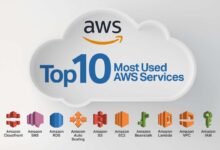
This is the largest domain and covers core AWS services. You’ll need to recognize and explain the purpose of key services across compute, storage, databases, and networking.
Key services to know include:
- Amazon EC2 (Elastic Compute Cloud) for virtual servers
- Amazon S3 (Simple Storage Service) for object storage
- Amazon RDS (Relational Database Service) for managed databases
- Amazon VPC (Virtual Private Cloud) for network isolation
- Amazon CloudFront for content delivery
You don’t need to know how to configure these services in depth, but you should understand their use cases and how they fit into the AWS ecosystem.
Pricing and Support (16% of the Exam)
This domain tests your ability to understand AWS pricing models, estimate costs, and navigate support options. You’ll learn how to use tools like the AWS Pricing Calculator and AWS Trusted Advisor.
Key topics include:
- Differences between On-Demand, Reserved, and Spot Instances
- The AWS Free Tier and its limitations
- Support plans (Basic, Developer, Business, Enterprise)
- Cost allocation tags and billing alerts
Understanding how to optimize costs is a critical skill, even at the foundational level, as businesses increasingly focus on cloud cost management.
How to Prepare for the AWS Certified Cloud Practitioner Exam
Success on the AWS Certified Cloud Practitioner exam doesn’t require coding skills, but it does require focused study and hands-on familiarity with the AWS platform.
Recommended Study Resources
AWS provides a range of free and paid resources to help you prepare. The official AWS Cloud Practitioner Essentials course is a great starting point. It’s a free, self-paced digital training that covers all exam domains.
Other highly recommended resources include:
- A Cloud Guru: Offers interactive labs and practice exams
- Udemy: Popular courses by Stephane Maarek and Neal Davis
- Whizlabs: Practice tests with detailed explanations
- Exam Pro: Free YouTube content and paid bootcamps
Many learners report that combining video courses with hands-on practice in the AWS Console significantly improves retention and confidence.
Hands-On Practice Tips
While the exam is conceptual, having real experience with the AWS Console is invaluable. Create a free-tier AWS account and explore the services covered in the exam.
Try these exercises:
- Launch a free-tier EC2 instance and connect via SSH
- Create an S3 bucket and upload a file
- Explore IAM by creating a user and assigning permissions
- Use the AWS Pricing Calculator to estimate monthly costs for a sample application
These activities help solidify abstract concepts and make the exam content more tangible.
Common Mistakes to Avoid as an AWS Certified Cloud Practitioner
Even with proper preparation, test-takers often fall into common traps that can cost them a passing score.
Misunderstanding the Shared Responsibility Model
One of the most frequently tested—and misunderstood—concepts is the AWS shared responsibility model. Many candidates incorrectly assume that AWS is responsible for all security aspects.
Remember: AWS is responsible for the security of the cloud (hardware, software, networking), while the customer is responsible for security in the cloud (data, applications, access control).
“If you store unencrypted sensitive data in S3 with public access, that’s on you—not AWS.” — AWS Security Whitepaper
Overcomplicating Simple Questions
The exam often presents straightforward questions disguised with complex wording. For example, a question might ask which service is best for storing static website assets. The correct answer is Amazon S3, but test-takers sometimes overthink and choose EC2 or CloudFront.
Stick to the basics: S3 is for storage, EC2 is for compute, CloudFront is for delivery.
Ignoring the Free Tier and Cost Management
Some candidates focus only on technical services and neglect the pricing and support domain. This is risky, as 16% of the exam covers cost optimization and billing tools.
Make sure you understand:
- How the AWS Free Tier works (12 months of select services)
- How to set up billing alerts
- The differences between support plans
These topics are not only exam-relevant but also practical for real-world cloud usage.
Career Paths After AWS Certified Cloud Practitioner
Earning the AWS Certified Cloud Practitioner is just the beginning. It serves as a springboard to more advanced certifications and specialized career paths.
Next-Level AWS Certifications
After passing the Cloud Practitioner exam, many professionals pursue role-based certifications such as:
- AWS Certified Solutions Architect – Associate
- AWS Certified Developer – Associate
- AWS Certified SysOps Administrator – Associate
- AWS Certified DevOps Engineer – Professional
Each of these certifications builds on the foundational knowledge gained from the AWS Certified Cloud Practitioner, allowing you to specialize in architecture, development, or operations.
Transitioning to Technical Roles
For non-technical professionals, this certification can be a gateway to technical roles. Many project managers and business analysts use it to pivot into cloud architecture or DevOps roles.
For example, a sales engineer with AWS Cloud Practitioner certification can better understand customer technical requirements, making them more effective in pre-sales discussions.
Similarly, IT support staff can use this credential to move into cloud operations or security roles, where demand is growing rapidly.
Real-World Impact of the AWS Certified Cloud Practitioner
Beyond the exam and career benefits, the AWS Certified Cloud Practitioner certification has tangible real-world applications.
Enhancing Team Collaboration
In organizations adopting AWS, having team members with foundational cloud knowledge improves cross-functional collaboration. Marketing, finance, and HR teams can better understand cloud costs and project timelines when they speak the same language as IT.
For example, a finance manager with AWS Certified Cloud Practitioner knowledge can interpret cloud billing reports and identify cost-saving opportunities.
Supporting Digital Transformation
As companies undergo digital transformation, the AWS Certified Cloud Practitioner helps bridge the knowledge gap between technical and non-technical stakeholders.
Executives who earn this certification gain confidence in making cloud investment decisions, while project managers can better oversee cloud migration projects.
According to a Gartner report from 2023, organizations with certified cloud staff report 40% faster cloud adoption and 30% higher ROI on cloud investments.
What is the AWS Certified Cloud Practitioner exam cost?
The AWS Certified Cloud Practitioner exam costs $100 USD. This fee is subject to change, so always check the official AWS Certification website for the most up-to-date pricing.
How long is the AWS Certified Cloud Practitioner valid?
The certification is valid for three years. After that, you must recertify by passing the current version of the exam to maintain your credential.
Is the AWS Certified Cloud Practitioner worth it?
Yes, especially if you’re new to cloud computing. It provides foundational knowledge, enhances your resume, and opens doors to further certifications and career opportunities in the AWS ecosystem.
Can I take the AWS Certified Cloud Practitioner exam online?
Yes, AWS offers online proctored exams through Pearson VUE. You can schedule the exam from home or office, provided you meet the technical and environmental requirements.
How hard is the AWS Certified Cloud Practitioner exam?
It’s considered an entry-level exam, but it requires solid preparation. Most candidates spend 4–6 weeks studying, especially if they’re new to cloud concepts. The pass rate is high for those who use official study materials and practice tests.
Earning the AWS Certified Cloud Practitioner certification is a smart move for anyone looking to build credibility in the cloud space. It’s not just a test of knowledge—it’s a career accelerator that validates your understanding of one of the most important technologies of our time. Whether you’re starting out or looking to enhance your current role, this certification delivers real value.
Further Reading: