Want to predict your AWS spending with precision? The AWS Cost Calculator is your ultimate tool for estimating cloud costs—accurately, efficiently, and for free. Let’s dive into how you can leverage it like a pro.
What Is the AWS Cost Calculator?

The AWS Cost Calculator, officially known as the AWS Pricing Calculator, is a free online tool provided by Amazon Web Services that allows users to estimate the monthly cost of running various AWS services. Whether you’re planning a small project or a large-scale enterprise deployment, this tool helps you forecast expenses before you deploy a single resource.





Core Purpose and Functionality
The primary goal of the AWS Cost Calculator is to provide transparency and predictability in cloud spending. It enables users to model different usage scenarios, compare service options, and understand how variables like data transfer, storage, and compute time affect overall costs.
- Estimate costs for EC2 instances, S3 storage, Lambda functions, and more.
- Model multi-region and multi-account deployments.
- Download detailed cost reports for internal review or stakeholder presentations.
Differences Between AWS Cost Calculator and AWS Budgets
It’s important to distinguish between the AWS Cost Calculator and AWS Budgets. While both deal with cost management, they serve different purposes. The Cost Calculator is a planning tool used before deployment, whereas AWS Budgets is a monitoring tool used after resources are live.
“The AWS Cost Calculator helps you avoid surprises; AWS Budgets helps you react to them.”
AWS Budgets allows you to set custom cost and usage thresholds and receive alerts when you exceed them. In contrast, the Cost Calculator gives you a forward-looking estimate based on projected usage.
Why Use the AWS Cost Calculator?
Cloud cost estimation is notoriously complex. Without proper tools, businesses risk overspending or under-provisioning. The AWS Cost Calculator eliminates guesswork, offering a structured way to plan your infrastructure spend.
Prevent Cost Overruns Before Deployment
One of the biggest advantages of using the AWS Cost Calculator is the ability to catch potential cost overruns before they happen. For example, selecting a high-performance R5 instance type for a low-traffic application might seem harmless, but the calculator will show you the financial impact over time.
- Identify expensive configurations early.
- Compare cheaper alternatives (e.g., Spot Instances vs. On-Demand).
- Adjust resource counts based on realistic usage patterns.
Support for Business Planning and Approvals
When proposing a new cloud project, stakeholders often demand cost justification. The AWS Cost Calculator generates professional-looking estimates that can be exported and shared. This makes it easier to get buy-in from finance teams or executives who need clarity on ROI and TCO (Total Cost of Ownership).
“A well-documented cost estimate from the AWS Cost Calculator can be the difference between project approval and rejection.”
How to Use the AWS Cost Calculator: Step-by-Step Guide
Using the AWS Cost Calculator is straightforward, but mastering it requires attention to detail. Let’s walk through the process from start to finish.
Step 1: Access the AWS Pricing Calculator
Go to https://calculator.aws and click on “Create estimate”. You’ll be taken to a clean interface where you can start adding services.
- No AWS account login is required to use the calculator.
- You can save your estimates if you log in with your AWS credentials.
- The interface supports multiple tabs for different environments (dev, staging, prod).
Step 2: Add AWS Services to Your Estimate
Click “Add Service” and choose from categories like Compute, Storage, Networking, Databases, and more. For example, if you’re building a web application, you might add:
- Amazon EC2 (for virtual servers)
- Amazon S3 (for static assets)
- Amazon RDS (for databases)
- Amazon CloudFront (for content delivery)
Each service lets you configure specific parameters such as instance type, region, usage hours, and storage capacity.
Step 3: Configure Detailed Usage Parameters
This is where precision matters. For EC2, you’ll specify:
- Instance family (e.g., t3, m5, c5)
- Instance size (e.g., small, medium, large)
- Operating system (Linux, Windows, RHEL, etc.)
- Purchasing option (On-Demand, Reserved, or Spot)
- Usage hours per month (e.g., 730 for full-time, 365 for half-time)
For S3, you’ll define:
- Storage class (Standard, Intelligent-Tiering, Glacier)
- Amount of data stored (in GB or TB)
- Number of GET/PUT requests per month
- Data transfer out to the internet
The more accurate your inputs, the more reliable your estimate.
Advanced Features of the AWS Cost Calculator
Beyond basic cost estimation, the AWS Cost Calculator offers several advanced features that make it indispensable for architects, DevOps engineers, and financial planners.
Multi-Region and Multi-Account Modeling
Modern applications often span multiple AWS regions for redundancy and performance. The calculator allows you to add services in different regions (e.g., us-east-1, eu-west-1) and see how geographic distribution affects cost.
- Compare pricing differences between regions (e.g., data transfer costs in Asia vs. North America).
- Model disaster recovery setups with standby resources in secondary regions.
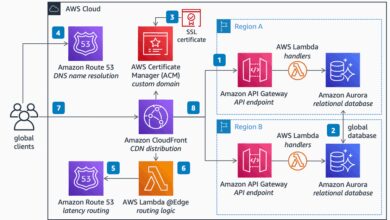
- Estimate costs for global user bases using CloudFront and Route 53.
Integration with AWS Well-Architected Framework
While not a direct integration, the AWS Cost Calculator supports the principles of the AWS Well-Architected Framework, particularly the Cost Optimization pillar. By using the calculator, you can ensure your design aligns with best practices for efficient resource usage.
“Designing for cost efficiency starts long before deployment—start with the AWS Cost Calculator.”
Exporting and Sharing Estimates
Once your estimate is complete, you can export it as a CSV file or PDF. This is useful for:
- Presenting to management or clients
- Archiving for future reference
- Comparing different architectural approaches
You can also share a link to your estimate if you’re logged in, enabling collaboration with team members.
Common Mistakes When Using the AWS Cost Calculator
Even experienced users can make errors when estimating cloud costs. Here are some of the most common pitfalls and how to avoid them.
Underestimating Data Transfer Costs
Data transfer—especially egress (data leaving AWS)—can be one of the most expensive line items. Many users forget to account for:
- Bandwidth used by end-users downloading content
- Replication between regions
- Backups sent to Glacier or external locations
Always input realistic data transfer volumes. For example, a 10 TB monthly egress from us-east-1 to the internet could cost over $900.
Ignoring Hidden or Indirect Costs
Some costs aren’t immediately obvious in the calculator but can add up:
- EBS snapshot storage (beyond the first 5 GB free tier)
- ELB (Elastic Load Balancer) hourly charges and request fees
- NAT Gateway data processing fees ($0.045 per GB)
- DNS queries on Route 53 (first 1 billion free, then $0.40 per million)
Make sure to add these services to your estimate even if they seem minor.
Overlooking Reserved Instance Commitments
The calculator lets you model Reserved Instances (RIs), which can save up to 75% compared to On-Demand pricing. However, many users either:
- Forget to include RIs in their estimate
- Overcommit without understanding utilization patterns
- Fail to account for the upfront payment required
Use the calculator to compare On-Demand vs. 1-year or 3-year RIs and assess cash flow impact.
Best Practices for Accurate AWS Cost Estimation
To get the most value from the AWS Cost Calculator, follow these proven best practices.
Start with a Clear Architecture Diagram
Before opening the calculator, sketch out your intended architecture. Include all components: compute, storage, databases, networking, security, and monitoring. This ensures you don’t miss critical services in your estimate.
- Use AWS Architecture Icons for clarity.
- Label expected usage patterns (e.g., 1000 users, 10 GB/day upload).
- Identify peak vs. average load times.
Leverage Real-World Benchmarks
If you’re migrating from on-premises or another cloud provider, use historical data to inform your inputs. For example:
- If your current server uses 40% CPU on average, choose an EC2 instance with headroom but avoid over-provisioning.
- If your app serves 50,000 images monthly, calculate S3 GET requests accordingly.
- If backups consume 200 GB weekly, factor in S3 or Glacier storage growth.
Iterate and Refine Your Estimate
Your first estimate is rarely perfect. Treat it as a draft. Revisit it as your project evolves:
- After initial feedback from developers
- After performance testing
- After reviewing AWS Trusted Advisor recommendations
Each iteration brings you closer to a realistic budget.
Alternatives and Complementary Tools to the AWS Cost Calculator
While the AWS Cost Calculator is powerful, it’s not the only tool available. Consider these alternatives and add-ons to enhance your cost management strategy.
AWS Total Cost of Ownership (TCO) Calculator
The AWS TCO Calculator helps you compare the cost of running workloads on-premises versus in the AWS Cloud. It’s ideal for migration planning and executive presentations.
- Inputs include server count, storage capacity, network devices, and labor costs.
- Outputs show 3- and 5-year cost comparisons.
- Includes savings from reduced power, cooling, and physical space.
Third-Party Cost Management Tools
Tools like CloudHealth by VMware, Datadog, and Spot by NetApp offer deeper analytics, real-time monitoring, and automated optimization. They integrate with AWS APIs to provide:
- Actual vs. forecasted spend tracking
- Right-sizing recommendations
- Automated shutdown of idle resources
These tools complement the AWS Cost Calculator by providing post-deployment insights.
AWS Cost Explorer and Budgets
Once your resources are live, switch to AWS Cost Explorer for historical analysis and trend forecasting. Combine it with AWS Budgets to set alerts and stay within your estimated range.
- Visualize spending by service, region, or tag
- Forecast future costs based on past usage
- Create custom budgets with email/SMS alerts
What is the AWS Cost Calculator?
The AWS Cost Calculator is a free online tool from Amazon Web Services that helps users estimate the monthly cost of using AWS services. It allows you to model different configurations and usage scenarios to forecast cloud spending before deployment.
Is the AWS Cost Calculator accurate?
The calculator provides highly accurate estimates if you input realistic usage data. However, it’s a planning tool—not a real-time billing system. Actual costs may vary based on usage spikes, unaccounted services, or changes in AWS pricing.
Can I save my estimates in the AWS Cost Calculator?
Yes, if you’re logged into your AWS account, you can save and name your estimates for future access. You can also export them as CSV or PDF files for sharing.
Does the AWS Cost Calculator include taxes?
No, the AWS Cost Calculator does not include taxes, shipping, or additional fees. These are calculated separately during actual billing based on your region and account settings.
How is the AWS Cost Calculator different from AWS Budgets?
The AWS Cost Calculator is used for pre-deployment cost estimation, while AWS Budgets is used for monitoring actual spending after deployment. The former is predictive; the latter is reactive and alert-based.
Mastering the AWS Cost Calculator is essential for anyone planning to use Amazon Web Services. It empowers you to make informed decisions, avoid budget overruns, and justify cloud investments with data. By understanding its features, avoiding common mistakes, and combining it with other tools like AWS Budgets and Cost Explorer, you can achieve true cost optimization. Whether you’re a startup founder, a DevOps engineer, or a CFO, this tool is your first line of defense against unpredictable cloud bills. Start using it today to build a financially sustainable cloud strategy.
Recommended for you 👇
Further Reading: