Want to explore the cloud without spending a dime? The AWS Free Tier offers a powerful, risk-free way to learn, build, and experiment with Amazon’s industry-leading cloud services — and yes, it’s completely free for up to 12 months. Let’s dive in.
What Is the AWS Free Tier?

The AWS Free Tier is Amazon Web Services’ generous offer to new users, allowing them to access a wide range of cloud computing resources at no cost. It’s designed to help individuals, startups, and developers get hands-on experience with AWS without financial risk. Whether you’re testing a new idea, learning cloud architecture, or building a prototype, the Free Tier is your launchpad.



Core Components of the Free Tier
The AWS Free Tier isn’t just one offer — it’s a combination of three distinct types of free usage: Always Free, 12-Month Free, and Trials. Each serves a different purpose and caters to different user needs.
- Always Free: Certain services like AWS Lambda, DynamoDB, and S3 offer limited usage completely free, forever.
- 12-Month Free: Most popular services (EC2, RDS, etc.) are free for the first 12 months after account creation.
- Free Trials: Time-limited trials for specific services like Amazon Connect or AWS Glue, often lasting 30 days.
Understanding these categories helps you maximize your free usage without unexpected charges.
Who Can Use the AWS Free Tier?
Any individual or organization that has never had an AWS account can sign up and access the Free Tier. You simply need a valid email address, a credit card (for identity verification, not immediate charges), and a phone number. AWS uses the card to verify your identity but won’t charge you unless you exceed Free Tier limits or use services outside the offer.
“The AWS Free Tier lowers the barrier to entry for cloud computing, making it accessible to students, hobbyists, and startups worldwide.” — AWS Official Documentation
It’s especially popular among students using platforms like AWS Educate and developers building MVPs (Minimum Viable Products).
Top 7 Services Included in the AWS Free Tier
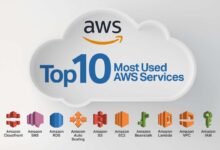
The real value of the AWS Free Tier lies in the breadth and depth of services available. Below are seven of the most impactful and widely used services you can access for free.
Amazon EC2 (12-Month Free)
Amazon Elastic Compute Cloud (EC2) is the backbone of AWS, offering scalable virtual servers in the cloud. Under the Free Tier, you get 750 hours per month of t2.micro or t3.micro instances (Linux or Windows) for the first 12 months.
- Perfect for hosting small websites, learning Linux, or running lightweight applications.
- 750 hours equals one instance running 24/7 for a month.
- Available in select regions like US East (N. Virginia), US West (Oregon), and EU (Ireland).
For more details, visit the official EC2 pricing page.
Amazon S3 (Always Free)
Amazon Simple Storage Service (S3) is a highly durable, scalable object storage service. The Free Tier includes 5 GB of standard storage, 20,000 Get Requests, and 2,000 Put Requests per month — forever.
- Ideal for storing backups, static website assets, or user uploads.
- Great for learning how cloud storage works with real-world use cases.
- Bandwidth and request limits apply, so monitor usage carefully.
S3 is one of the most reliable and widely adopted storage solutions in the world. Learn more at AWS S3 Pricing.
Amazon RDS (12-Month Free)
Relational Database Service (RDS) simplifies setting up, operating, and scaling databases. The Free Tier gives you 750 hours per month of a db.t3.micro instance using MySQL, PostgreSQL, MariaDB, Oracle, or SQL Server Express Edition.
- Includes 20 GB of General Purpose (SSD) storage.
- Perfect for small web apps, CMS platforms, or learning SQL in the cloud.
- Automated backups and monitoring are included.
Just remember: if you create multiple instances or exceed storage, charges apply. Check the RDS Free Tier details for full specs.
AWS Lambda (Always Free)
Lambda is a serverless compute service that runs your code in response to events. The Free Tier includes 1 million free requests per month and 400,000 GB-seconds of compute time — forever.
- No servers to manage — ideal for microservices, automation, and event-driven apps.
- Great for beginners learning serverless architecture.
- Common uses: image resizing, form processing, chatbots.
Lambda is a game-changer for cost-efficient, scalable applications. Explore more at AWS Lambda Pricing.
Amazon DynamoDB (Always Free)
DynamoDB is a fast, fully managed NoSQL database. The Free Tier offers 25 GB of storage, 25 units of write capacity, and 25 units of read capacity — all completely free, forever.
- Perfect for mobile apps, gaming backends, and IoT data storage.
- Auto-scales to handle traffic spikes without manual intervention.
- Integrates seamlessly with Lambda and API Gateway.
It’s one of the most developer-friendly databases on AWS. Learn more at DynamoDB Pricing.
Amazon CloudWatch (Always Free)
CloudWatch monitors AWS resources and applications. The Free Tier includes basic monitoring, 5 GB of log data ingestion, and 5 GB of log storage per month — forever.
- Track CPU usage, network traffic, and application logs.
- Set alarms to notify you of unusual activity.
- Essential for maintaining performance and security.
Monitoring is critical even in free environments. Visit CloudWatch Pricing for details.
AWS Identity and Access Management (IAM) (Always Free)
IAM is free to use and allows you to manage access to AWS services securely. While not a compute or storage service, it’s foundational for security.
- Create users, groups, and roles with fine-grained permissions.
- Enable Multi-Factor Authentication (MFA) for added security.
- Essential for following the principle of least privilege.
No free tier limit — IAM is always free. Learn more at IAM Pricing.
How to Sign Up for the AWS Free Tier
Getting started with the AWS Free Tier is straightforward, but it’s important to follow the steps carefully to avoid accidental charges.
Step-by-Step Registration Process
1. Go to aws.amazon.com/free and click “Create a Free Account.”
2. Enter your email address and create a password.
3. Provide your personal information (name, address, phone number).
4. Enter a valid credit card for identity verification.
5. Complete the identity verification process (AWS may call you to confirm).
- You won’t be charged unless you exceed Free Tier limits.
- AWS sends monthly billing alerts to keep you informed.
After registration, you’ll have immediate access to all Free Tier-eligible services.
Common Pitfalls to Avoid
While the Free Tier is generous, many users accidentally incur charges. Here are common mistakes:
Running multiple EC2 instances: The free tier allows only one t2.micro instance.Running two will charge you for the second.Using reserved instances: Reserved instances are not part of the Free Tier — only On-Demand usage is free.Ignoring region selection: Some services are only free in specific regions..
Always check availability.Forgetting to terminate resources: Always stop or terminate EC2 instances, RDS databases, and EBS volumes when not in use.”The biggest cost on AWS isn’t the service — it’s forgetting to turn it off.” — Cloud Cost Management Best PracticeMaximizing Your AWS Free Tier UsageTo get the most out of the AWS Free Tier, you need a strategy.It’s not just about using free services — it’s about using them wisely..
Plan Your Architecture
Before launching any service, sketch out your architecture. Ask yourself:
- Do I need a database? If yes, use RDS or DynamoDB within limits.
- Do I need a server? Use EC2, but ensure it’s a t2.micro and shut it down when idle.
- Can I go serverless? Use Lambda + API Gateway + S3 for static sites.
A well-planned architecture prevents over-provisioning and keeps you within free limits.
Use Cost Monitoring Tools
AWS provides several tools to track your usage and avoid surprises.
- AWS Budgets: Set custom cost and usage budgets with alerts.
- Cost Explorer: Visualize your spending trends over time.
- Trusted Advisor: Get recommendations on cost optimization, security, and performance.
Enable billing alerts in the AWS Management Console under “Billing & Cost Management.”
Leverage Automation
Automate resource management to stay within free limits.
- Use AWS Lambda to stop EC2 instances at night or on weekends.
- Schedule RDS instances to start and stop using EventBridge and Lambda.
- Set up S3 lifecycle policies to delete old objects automatically.
Automation reduces manual errors and ensures cost control.
Real-World Projects You Can Build on the AWS Free Tier
The AWS Free Tier isn’t just for learning — it’s powerful enough to host real, functional projects.
Personal Portfolio Website
Host a static website using Amazon S3 and CloudFront (CDN). You can store HTML, CSS, and JavaScript files in S3 and serve them globally via CloudFront.
- S3 provides 5 GB storage — more than enough for a portfolio.
- CloudFront has a 12-month free tier with 50 GB data transfer out.
- Add a custom domain using Route 53 (limited free tier for 1st year).
This setup is fast, secure, and completely free for a year.
Serverless API with Lambda and API Gateway
Build a REST API that processes data without managing servers.
- Use AWS Lambda for backend logic (1M free requests/month).
- API Gateway offers 1M free API calls per month for 12 months.
- Store data in DynamoDB (25 GB free).
Perfect for mobile apps, chatbots, or IoT backends. Learn more at API Gateway Pricing.
Learning Environment for DevOps and Cloud Skills
Use the Free Tier to practice real cloud skills:
- Set up a CI/CD pipeline using AWS CodePipeline and CodeBuild (limited free tier).
- Practice infrastructure as code with AWS CloudFormation or Terraform.
- Learn containerization with Amazon ECS or EKS (limited free usage).
These skills are in high demand — and the Free Tier lets you gain hands-on experience at zero cost.
What Happens After 12 Months?
The 12-month Free Tier doesn’t last forever. Knowing what to expect helps you plan your next steps.
Services That Remain Free
Not all free access ends after a year. Some services continue to offer limited free usage:
- AWS Lambda (1M requests/month)
- Amazon S3 (5 GB storage)
- DynamoDB (25 GB storage)
- CloudWatch (basic monitoring)
These “Always Free” services are perfect for maintaining small projects or personal tools.
Services That Start Charging
After 12 months, services like EC2, RDS, and Elastic Load Balancing will start incurring charges based on usage.
- A t3.micro EC2 instance costs ~$10-15/month if run continuously.
- RDS db.t3.micro costs ~$15-20/month.
- Data transfer and storage beyond free tiers are billed.
You’ll receive email notifications before your free tier expires.
Strategies for Continuing on a Budget
You don’t have to stop using AWS after 12 months. Here’s how to keep costs low:
- Downsize instances to the smallest available.
- Use Spot Instances for non-critical workloads (up to 90% savings).
- Switch to serverless where possible (Lambda, DynamoDB).
- Monitor usage closely with Cost Explorer.
Many developers continue using AWS for under $5/month with careful planning.
Common Myths and Misconceptions About the AWS Free Tier
Despite its popularity, the AWS Free Tier is often misunderstood. Let’s debunk some common myths.
Myth 1: The Free Tier Means Unlimited Free Usage
False. The Free Tier has strict limits on usage, storage, and duration. Exceeding these limits results in charges. For example, running two EC2 instances will cost you for the second one.
“Free doesn’t mean unlimited. Always check the service-specific limits.” — AWS Support
Myth 2: You’ll Be Charged Immediately
No. AWS won’t charge you unless you go beyond Free Tier limits or use paid services. The credit card is for verification, not automatic billing. You’ll receive alerts before any charges apply.
Myth 3: All Regions Are Covered
Not true. Some Free Tier benefits are only available in specific AWS regions, like US East (N. Virginia). Always check regional availability before launching resources.
Best Practices for Staying Within AWS Free Tier Limits
To avoid surprise bills, follow these proven best practices.
Set Up Billing Alerts
Go to the AWS Billing Dashboard and create a budget with alerts at 50%, 80%, and 100% of your expected free usage. This gives you early warnings if something goes wrong.
Use the AWS Free Tier Console Dashboard
AWS provides a dedicated Free Tier dashboard that shows your usage against free limits. Check it regularly to stay on track.
Terminate Unused Resources Immediately
Don’t just stop EC2 instances — terminate them if you’re done. Stopped instances still incur EBS storage charges. Delete S3 buckets, RDS snapshots, and AMIs you no longer need.
- Use AWS CLI or SDKs to automate cleanup.
- Schedule weekly reviews of active resources.
Remember: if it’s running, it might be costing you.
Is the AWS Free Tier really free?
Yes, the AWS Free Tier is genuinely free for eligible services and within specified limits. You won’t be charged as long as you stay within the free usage tiers and don’t use services outside the offer.
Do I need a credit card to sign up?
Yes, AWS requires a valid credit card for identity verification. However, you won’t be charged unless you exceed Free Tier limits or use paid services.
Can I extend the 12-month Free Tier?
No, the 12-month Free Tier is only available once per AWS account. Creating multiple accounts to get more free time violates AWS terms of service.
What happens if I exceed Free Tier limits?
You’ll be charged the standard pay-as-you-go rates for the overage. AWS will notify you via email and billing alerts.
Can I use the Free Tier for commercial projects?
Yes, as long as you stay within the Free Tier limits. Many startups use it to launch MVPs and validate ideas before scaling.
The AWS Free Tier is a powerful gateway to the cloud, offering unmatched flexibility and value for new users. From hosting websites to building serverless APIs, it enables real-world learning and innovation at zero cost. By understanding the limits, planning your usage, and following best practices, you can maximize its benefits without unexpected charges. Whether you’re a student, developer, or entrepreneur, the AWS Free Tier is your first step into the future of computing.
aws free tier – Aws free tier menjadi aspek penting yang dibahas di sini.
Further Reading: